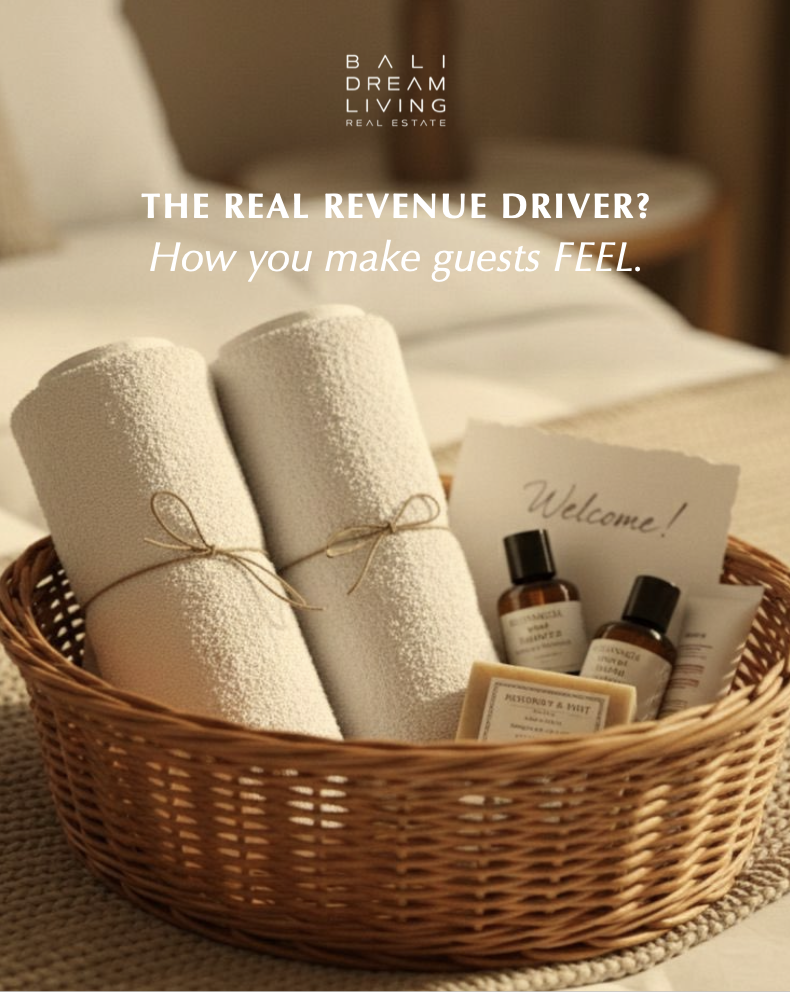
Professional property management isn’t just about operations. It’s about how you make people feel.
Most villa owners focus on the tangible: occupancy rates, nightly prices, cleaning fees, booking platform commissions.
These numbers matter. But they tell only half the story — because revenue growth also depends on how well pricing and guest experience work together.
The other half — the one that separates a fully booked villa from a struggling one — is emotional hospitality.
And emotional hospitality has a measurable return on investment.
What Is Emotional Hospitality?
Emotional hospitality is the art of making guests feel seen, safe, and cared for — before, during, and after their stay.
It’s not about luxury amenities or expensive welcome gifts. It’s about:
- A seamless check-in process when they arrive after a long flight
- A quick, warm response when they message with a question
- A villa that smells fresh, feels clean, and works perfectly
- A small gesture when something goes wrong (because something always can)
These moments create trust. Trust creates loyalty. Loyalty creates repeat bookings and 5-star reviews.That is the ROI of emotional hospitality.
Why Most Property Managers Miss This
Many property managers focus exclusively on operations:
- Keys handed over
- Cleaning done
- Maintenance fixed
But operational checklists don’t make guests feel special. They don’t turn a one-time guest into a returning guest. And they certainly don’t generate the kind of word-of-mouth marketing that money cannot buy.
Emotional hospitality requires intention. It requires a team that listens, anticipates, and cares. And it requires systems that support human connection — not replace it.
The Numbers Behind Feelings
Consider two identical villas in Uluwatu:
Villa A – Operationally fine, but emotionally neutral. Responses are slow. Small issues go unacknowledged. Guests leave feeling nothing in particular.
Villa B – Operationally excellent, plus emotionally intentional. Guests receive a warm welcome message. Small problems are met with genuine apologies and quick fixes. Guests feel valued.
Which villa gets the 5-star review? Which one gets the guest who returns next year with their family? Which one commands higher nightly rates?
Villa B. Every time.
Emotional hospitality drives:
- Higher review scores
- More direct bookings (less commission paid to platforms)
- Repeat guests (lower marketing costs)
- Premium pricing power
How Professional Property Management Delivers Emotional Hospitality
Delivering emotional hospitality at scale requires more than good intentions. It requires:
- A responsive communication system
Guests should never wait more than a few hours for a response — even if it’s just “We’re looking into this for you.” - Local team members who genuinely care
Training housekeepers, maintenance staff, and guest relations to treat every villa as if it were their own home. - Proactive problem identification
Catching issues before guests do — low water pressure, a broken light bulb, a missing pool towel — and fixing them silently. - Small, thoughtful touches
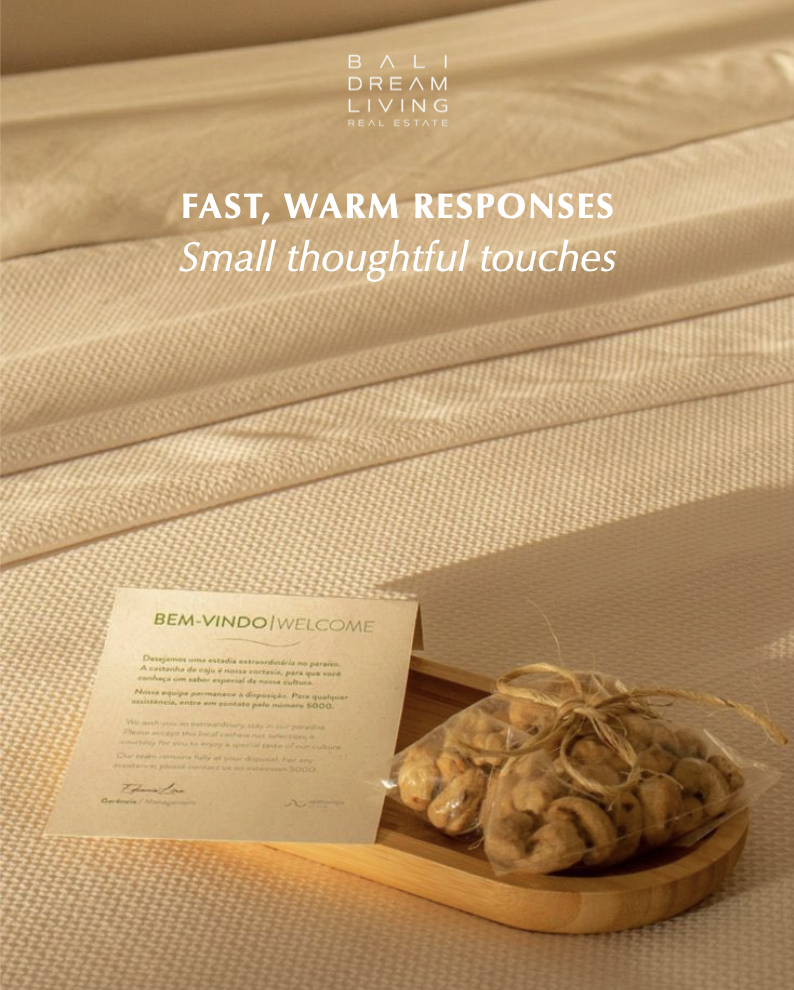
A handwritten note. A local restaurant recommendation. A follow-up message after checkout thanking them for staying.
None of these cost much. But their impact on guest loyalty is priceless.
The Bottom Line
Emotional hospitality is not soft. It is not optional. And it is certainly not fluff.
It is a profit strategy.
Villa owners who partner with property managers that understand this will see the results in their bank account — not just their review score.
The ROI of emotional hospitality is real. And in Uluwatu, where competition is fierce, it may be the only advantage that truly matters.